
1599 Geneva Bible (GNV)
The Geneva Bible: A Cornerstone of English Protestantism A Testament to Reform The 1599 Geneva Bible... Read More
Mindfulness and spirituality can feel abstract, yet they become real when tied to daily routines. Small shifts in tone, space, and timing help students settle, notice feelings, and return to learning with a clearer mind.
You do not need long lessons or special gear. A few steady practices, used at the same time each day, build trust and make the classroom feel safe. When students sense that calm is welcome, they begin to carry it into their work and relationships.

Your presence sets the rhythm for the room. A short, quiet pause before roll call can signal safety and bring attention to the moment. Breathing slowly and speaking with simple words helps students match your calm.
A peer-reviewed study in Frontiers in Education found that structured mindfulness training increased teachers’ well-being and self-efficacy while improving classroom climate, with gains that lasted beyond the program. Those findings align with what many educators notice once routines take hold. When adults ground themselves first, students follow with fewer prompts and fewer reminders.
Protect a few minutes for yourself before students arrive. Step into the room, inhale for four counts, exhale for six, and feel your feet on the floor. When you are steady, transitions flow, and the group learns to read your cues.
Students learn faster when practices are clear and visible. Use a bell, a hand signal, or a short script to mark the start of a breathing break. Keep directions the same each time so attention goes to the practice, not the instructions.
Start a reflective routine. Invite students to name qualities of effective teaching. You might even point them to this good teacher quiz as a quick check-in. Then ask how those qualities show up in your room today. This anchors inner noticing to daily learning. When students spot one thing to repeat, the habit sticks.
Celebrate small wins and tie them to skill language. If a student catches themselves before snapping at a peer, name the self-regulation and why it matters for group trust. Confidence grows when learners can see and describe their progress.
Short, repeated moments work better than long, rare ones. A 60 to 120 second reset after transitions can be enough to lower noise and raise attention. The class expects and relies on these tiny tune-ups.
An evidence overview from the Mindfulness in Schools Project noted that the teacher-focused research base remains positive and promising, which supports the use of brief, regular routines across a semester. These moments will not solve every challenge, but they build attentional stamina and relational care. The key is consistency and a good fit with your schedule.
Try a simple daily mix that students can eventually lead:
Spirituality in schools is about meaning, connection, and purpose. It is not about promoting a belief system. Set a norm that all students can reflect on values, dignity, and awe using language that feels right to them.
Invite practices that travel across traditions, like gratitude, compassion, and wonder. A short poem about belonging, a nature image, or a question like What gave you strength this week can open a gentle doorway. Students learn to hold differences with respect and curiosity.
Guardrail the space with clear boundaries so it stays inclusive and safe. Participation is by invitation, sharing is optional, and teasing is out. When students trust the frame, they are more willing to explore inner life and to listen generously to others.
Your energy is not endless, and students feel your highs and lows. Pair the work of leading practices with habits that replenish you. If you guide breathing breaks for the class, schedule your own five-minute reset midday.
A Teachers College article highlighted that national health guidance in 2024 recognized spirituality as one of four pillars of well-being, which validates school efforts to support meaning and purpose at work. That context can make it easier to propose quiet rooms, walking meetings, or optional staff circles. When adults are resourced, classrooms benefit downstream.
Design personal micro-practices that travel with you. A one-minute box-breath while the class lines up, a brief gratitude note after lunch, or a mindful walk to the copier can keep your nervous system in range. Sustainable teaching grows from many small acts of maintenance.
Collect simple data to see what helps. Track start-of-class focus, time to on-task, or the number of redirections after a breathing break. Invite student feedback with quick exit slips and rotate prompts so you hear from different voices.
Look for patterns across weeks, not days. If a routine feels flat, try a different doorway into the same skill. Some groups prefer movement or journaling over stillness, and the right match often unlocks engagement.
Use a short review cycle to refine practice:
Bring counselors, nurses, and family liaisons into the loop so language and cues stay consistent across settings. When multiple adults use the same brief scripts, students transfer skills more easily. Shared signals make it simpler to re-center during stressful moments.
Host a short demo during a staff meeting so colleagues can feel the practice from the inside. When adults experience calm together, buy-in grows, and skepticism softens. Invite student leaders to co-teach a routine during homeroom to normalize ownership.
Sustain momentum by rotating roles and responsibilities. One student rings the bell, another guides the count, and a third offers a reflective prompt. Ownership turns mindfulness from a teacher-led add-on into a community habit with its own rhythm.

Quiet is a resource that students can learn to create together. With simple, consistent routines, the class can return to the center and move on with more focus. The goal is not to chase perfection but to build durable habits that make learning feel safe and meaningful.
Keep the spirit of exploration. Try one small change, watch what happens, and adjust. These moments shape a caring culture where everyone can learn while staying connected to purpose, self-respect, and community.
The Geneva Bible: A Cornerstone of English Protestantism A Testament to Reform The 1599 Geneva Bible... Read More
The 21st Century King James Version (KJ21): A Modern Approach to a Classic Text A Balancing Act The ... Read More
The American Standard Version (ASV): A Cornerstone of Modern English Bibles A Product of Scholarly R... Read More
The Amplified Bible (AMP): A Rich and Comprehensive Translation The Amplified Bible (AMP) stands out... Read More
The Amplified Bible, Classic Edition (AMPC): A Timeless Treasure The Amplified Bible, Classic Editio... Read More
The Authorized (King James) Version (AKJV): A Timeless Classic The Authorized King James Version (AK... Read More
The BRG Bible: A Colorful Approach to Scripture A Unique Visual Experience The BRG Bible, an acronym... Read More
The Christian Standard Bible (CSB): A Balance of Accuracy and Readability The Christian Standard Bib... Read More
The Common English Bible (CEB): A Translation for Everyone The Common English Bible (CEB) is a conte... Read More
The Complete Jewish Bible (CJB): A Jewish Perspective on Scripture The Complete Jewish Bible (CJB) i... Read More
The Contemporary English Version (CEV): A Bible for Everyone The Contemporary English Version (CEV),... Read More
The Darby Translation: A Literal Approach to Scripture The Darby Translation, often referred to as t... Read More
The Disciples' Literal New Testament (DLNT): A Window into the Apostolic Mind The Disciples’ Literal... Read More
The Douay-Rheims 1899 American Edition (DRA): A Cornerstone of English Catholicism The Douay-Rheims ... Read More
The Easy-to-Read Version (ERV): A Bible for Everyone The Easy-to-Read Version (ERV) is a modern Engl... Read More
The English Standard Version (ESV): A Modern Classic The English Standard Version (ESV) is a contemp... Read More
The English Standard Version Anglicised (ESVUK): A British Accent on Scripture The English Standard ... Read More
The Evangelical Heritage Version (EHV): A Lutheran Perspective The Evangelical Heritage Version (EHV... Read More
The Expanded Bible (EXB): A Study Bible in Text Form The Expanded Bible (EXB) is a unique translatio... Read More
GOD'S WORD Translation (GW): A Modern Approach to Scripture The GOD'S WORD Translation (GW) is a con... Read More
The Good News Translation (GNT): A Bible for Everyone The Good News Translation (GNT), formerly know... Read More
The Holman Christian Standard Bible (HCSB): A Balance of Accuracy and Readability The Holman Christi... Read More
The International Children's Bible (ICB): A Gateway to Faith The International Children's Bible (ICB... Read More
The International Standard Version (ISV): A Modern Approach to Scripture The International Standard ... Read More
The J.B. Phillips New Testament: A Modern Classic The J.B. Phillips New Testament, often referred to... Read More
The Jubilee Bible 2000 (JUB): A Unique Approach to Translation The Jubilee Bible 2000 (JUB) is a dis... Read More
The King James Version (KJV): A Timeless Classic The King James Version (KJV), also known as the Aut... Read More
The Lexham English Bible (LEB): A Transparent Approach to Translation The Lexham English Bible (LEB)... Read More
The Living Bible (TLB): A Paraphrase for Modern Readers The Living Bible (TLB) is a unique rendering... Read More
The Modern English Version (MEV): A Contemporary Take on Tradition The Modern English Version (MEV) ... Read More
The Mounce Reverse Interlinear New Testament: A Bridge to the Greek The Mounce Reverse Interlinear N... Read More
The Names of God Bible (NOG): A Unique Approach to Scripture The Names of God Bible (NOG) is a disti... Read More
The New American Bible, Revised Edition (NABRE): A Cornerstone of English Catholicism The New Americ... Read More
The New American Standard Bible (NASB): A Cornerstone of Literal Translations The New American Stand... Read More
The New American Standard Bible 1995 (NASB1995): A Refined Classic The New American Standard Bible 1... Read More
The New Catholic Bible (NCB): A Modern Translation for a New Generation The New Catholic Bible (NCB)... Read More
The New Century Version (NCV): A Bible for Everyone The New Century Version (NCV) is an English tran... Read More
The New English Translation (NET): A Transparent Approach to Scripture The New English Translation (... Read More
The New International Reader's Version (NIRV): A Bible for Everyone The New International Reader's V... Read More
The New International Version - UK (NIVUK): A British Accent on Scripture The New International Vers... Read More
The New International Version (NIV): A Modern Classic The New International Version (NIV) is one of ... Read More
The New King James Version (NKJV): A Modern Update of a Classic The New King James Version (NKJV) is... Read More
The New Life Version (NLV): A Bible for All The New Life Version (NLV) is a unique English translati... Read More
The New Living Translation (NLT): A Modern Approach to Scripture The New Living Translation (NLT) is... Read More
The New Matthew Bible (NMB): A Reformation Revival The New Matthew Bible (NMB) is a unique project t... Read More
The New Revised Standard Version (NRSV): A Modern Classic The New Revised Standard Version (NRSV) is... Read More
The New Revised Standard Version Catholic Edition (NRSVCE): A Cornerstone of Modern Catholicism The ... Read More
The New Revised Standard Version, Anglicised (NRSVA): A British Accent on Scripture The New Revised ... Read More
The New Revised Standard Version, Anglicised Catholic Edition (NRSVACE): A Bridge Between Tradition ... Read More
The New Testament for Everyone (NTE): A Fresh Perspective The New Testament for Everyone (NTE) is a ... Read More
The Orthodox Jewish Bible (OJB): A Unique Perspective The Orthodox Jewish Bible (OJB) is a distincti... Read More
The Revised Geneva Translation (RGT): A Return to the Roots The Revised Geneva Translation (RGT) is ... Read More
The Revised Standard Version (RSV): A Cornerstone of Modern English Bibles The Revised Standard Vers... Read More
The Revised Standard Version Catholic Edition (RSVCE): A Cornerstone of English Catholicism The Revi... Read More
The Message (MSG): A Contemporary Paraphrase The Message, often abbreviated as MSG, is a contemporar... Read More
The Voice: A Fresh Perspective on Scripture The Voice is a contemporary English translation of the B... Read More
The Tree of Life Version (TLV): A Messianic Jewish Perspective The Tree of Life Version (TLV) is a u... Read More
The World English Bible (WEB): A Modern Update on a Classic The World English Bible (WEB) is a conte... Read More
The Worldwide English (WE) New Testament: A Modern Take on a Classic The Worldwide English (WE) New ... Read More
The Wycliffe Bible: A Cornerstone of English Scripture A Revolutionary Translation The Wycliffe Bibl... Read More
Young's Literal Translation (YLT): A Literal Approach to Scripture Young's Literal Translation (YLT)... Read More
For enthusiastic readers, managing a collection of books can become challenging. An expanding "to be... Read More
Deuteronomy 18 - "And if you say in your heart, 'How shall we know the word which the LORD has not ... Read More
John 14:26 - "But the Counselor, the Holy Spirit, whom the Father will send in my name, he will teac... Read More
(Enlarge) (PDF for Print) Map of the Origin of Nations and Races that were dispersed by God in Gene... Read More
The Journeys of Abraham (Enlarge) (PDF for Print) - Map of Abraham's Journey with Trade Routes Map ... Read More
(Enlarge) (PDF for Print) Map of the Route of the Hebrews from Egypt This map shows the Exodus of t... Read More
Mark 6:52 - For they considered not the miracle of the loaves: for their heart was hardened. God did... Read More
also see:The Encampment of the Children of IsraelThe Children of Israel on the March THE OUTER COURT... Read More
2 Chronicles 36:23 - Thus saith Cyrus king of Persia, All the kingdoms of the earth hath the LORD Go... Read More
All Bible Maps - Complete and growing list of Bible History Online Bible Maps. Old Testament Maps T... Read More
The Bible portrays marriage as a lifelong bond built on love, faith, and commitment, reflecting God'... Read More
Ancient Manners and Customs, Daily Life, Cultures, Bible Lands NINEVEH was the famous capital of an... Read More
Distances From Jerusalem to: Bethany - 2 milesBethlehem - 6 milesBethphage - 1 mileCaesarea - 57 m... Read More
Dagon was the god of the Philistines. This image shows that the idol was represented in the combina... Read More
Map of Israel in the Time of Jesus (Enlarge) (PDF for Print) Map of First Century Israel with Roads... Read More
The Table of Shewbread (Ex 25:23-30) It was also called the Table of the Presence. Now we will pas... Read More
see also:The PriestThe Consecration of the PriestsThe Priestly Garments The Priestly Garments 'The ... Read More
Introduction to the Book of Daniel in the Bible Daniel 6:15-16 - Then these men assembled unto the k... Read More
The Golden Lampstand was hammered from one piece of gold. Exod 25:31-40 "You shall also make a lam... Read More
The Golden Altar of Incense (Ex 30:1-10) The Golden Altar of Incense was 2 cubits tall.It was 1 cub... Read More
Ancient Tax Collector Illustration of a Tax Collector collecting taxes Tax collectors were very des... Read More
also see: Blood Atonement and The Priests The Five Levitical Offerings The Sacrifices The sacrificia... Read More
Genesis 10:32 - These are the families of the sons of Noah, after their generations, in their nation... Read More
Illustration of Jesus Reading from the Book of Isaiah This sketch contains a colored illustration o... Read More
"But the angel said unto him, Fear not, Zacharias: for thy prayer is heard; and thy wife Elisabeth s... Read More
also see: The Encampment of the Children of IsraelThe Children of Israel on the March The brazen a... Read More
In a rapidly evolving world shaped by both timeless values and groundbreaking technology, individual... Read More
Rome, the Eternal City, has stood as a symbol of history, culture, and religion for over two millenn... Read More
Many teachers assign pieces titled “an essay about god in my life.” The title invites calm thought a... Read More
Exploring identity has become part of the digital life. Social media, streaming, and gaming give you... Read More
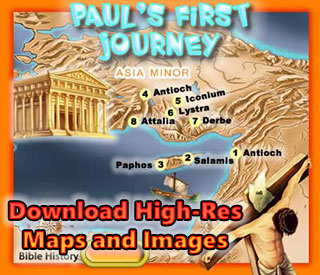
Unearth the rich tapestry of biblical history with our extensive collection of over 1000 meticulously curated Bible Maps and Images. Enhance your understanding of scripture and embark on a journey through the lands and events of the Bible.
Start Your Journey Today!