
1599 Geneva Bible (GNV)
The Geneva Bible: A Cornerstone of English Protestantism A Testament to Reform The 1599 Geneva Bible... Read More
Imagine you have spent years shaping a book or article about Bible history. You have checked dates, compared maps, and tried to describe scenes so clearly that a reader can almost feel the dust of an ancient road. Then you look at your traffic and realize most visitors are from just one language group.
These days a lot of people don't sit down with a book the way they used to. They listen instead. They've got Scripture playing on their phones while they drive, wash dishes, or try to get the kids ready. A short sermon or lesson just runs in the background while life keeps moving. And many of those people are nowhere near you geographically, thinking and praying in a language you don't speak at all.
Multilingual voice agents for authors sit right in the middle of this change. They turn your written work into spoken audio in several languages so that the same careful research can reach people who might never open a printed page in your tongue.
For a site that cares about Bible history and archaeology, this is not just a technical upgrade. It is another way to serve the global church with what you already know and love to teach.
A multilingual voice agent is really just a voice that lives inside your content. You write the material, and it reads it aloud on your behalf, often in several languages. Most of the time it’s hidden away in an app, website, or learning tool, doing nothing at all until a listener clicks a play icon or taps on the part they want to hear.
In real use, a solid voice agent can:
To the person listening, it does not feel like software. It feels more like a calm guide who is always ready with the next line or the next bit of background.
You do not have to carry the technical part on your shoulders. A developer or media team can wire in tools such as Falcon low latency voice API behind the scenes so the audio starts quickly and stays smooth. Your main job stays very simple and very old: study well, write honestly, and keep the people you hope to serve in mind while you work.
Many writers worry that once a machine starts reading, everything will sound the same: flat, rushed, and a little cold. That fear is understandable, especially when your subject is sacred history and not just entertainment.
The key point is this: the voice agent is not the author. It is a mouth, not a mind. The tone, structure, and warmth still begin in your writing. If the script feels human, the audio has a chance to feel human too.
A few simple habits make a big difference:
When you do this, your style becomes something the listener recognizes across chapters and even across languages. They may hear a different accent in each tongue, but the rhythm and care behind the words stay the same.
Switching from “I write articles” to “people can listen to my work” feels big when you look at it all at once. It’s easier if you treat it like a small side project, not a full rebuild of everything you do.
You can ease into it with a few clear steps.
By the time you’ve gone through this once, the whole idea of adding voice will feel less mysterious. You’ll know what works for your audience, what doesn’t, and what you’d like to try on the next project.
Bible history and archaeology material is already rich with places, dates, and cultures. Audio does not replace that detail. It simply gives another way to walk through it.
Some parts of your work are especially suited to a multilingual voice layer:
Material like this usually has its own rhythm, so it works well when you turn it into speech. Heard through headphones, it can feel a bit like a friend explaining Bible events over a cup of coffee, not a textbook being read at you.
When you put that audio into more than one language, you make room for listeners who find long written pieces hard to get through. They still hear the same teaching and background, just in a voice and accent that fit the way they normally think and talk.
Working with Bible history always involves a careful balance. You want to respect the text of Scripture, handle historical sources honestly, and stay humble about what we can and cannot know for sure. Adding technology into that mix can feel risky.
One way to think about multilingual voice agents for authors is to see them as a delivery method, not as a new authority. They do not decide what is true or what a passage means. They simply carry your study and teaching into more hearts and languages.
You still decide how carefully to handle dates, how to describe disputed sites, and how to connect historical facts with spiritual lessons. The voice agent only gives more people the chance to hear those choices.
When used in that spirit, audio becomes a quiet partner to your written work. It respects your convictions and methods, while helping your message move beyond your own voice and time zone.
Multilingual voice agents for authors are not about chasing a trend. They are about hospitality with your words. You invite people from other languages and listening habits into the same careful world of Bible history that you already love.
By starting small, writing with the ear in mind, and letting a simple system speak your words in several tongues, you let your research and storytelling travel much farther than you ever could on your own.
You may never meet the listener who hears a late-night explanation of an ancient city in their own language. But your work can still reach them, and in the kingdom of God, that kind of quiet reach is often how real change begins.
The Geneva Bible: A Cornerstone of English Protestantism A Testament to Reform The 1599 Geneva Bible... Read More
The 21st Century King James Version (KJ21): A Modern Approach to a Classic Text A Balancing Act The ... Read More
The American Standard Version (ASV): A Cornerstone of Modern English Bibles A Product of Scholarly R... Read More
The Amplified Bible (AMP): A Rich and Comprehensive Translation The Amplified Bible (AMP) stands out... Read More
The Amplified Bible, Classic Edition (AMPC): A Timeless Treasure The Amplified Bible, Classic Editio... Read More
The Authorized (King James) Version (AKJV): A Timeless Classic The Authorized King James Version (AK... Read More
The BRG Bible: A Colorful Approach to Scripture A Unique Visual Experience The BRG Bible, an acronym... Read More
The Christian Standard Bible (CSB): A Balance of Accuracy and Readability The Christian Standard Bib... Read More
The Common English Bible (CEB): A Translation for Everyone The Common English Bible (CEB) is a conte... Read More
The Complete Jewish Bible (CJB): A Jewish Perspective on Scripture The Complete Jewish Bible (CJB) i... Read More
The Contemporary English Version (CEV): A Bible for Everyone The Contemporary English Version (CEV),... Read More
The Darby Translation: A Literal Approach to Scripture The Darby Translation, often referred to as t... Read More
The Disciples' Literal New Testament (DLNT): A Window into the Apostolic Mind The Disciples’ Literal... Read More
The Douay-Rheims 1899 American Edition (DRA): A Cornerstone of English Catholicism The Douay-Rheims ... Read More
The Easy-to-Read Version (ERV): A Bible for Everyone The Easy-to-Read Version (ERV) is a modern Engl... Read More
The English Standard Version (ESV): A Modern Classic The English Standard Version (ESV) is a contemp... Read More
The English Standard Version Anglicised (ESVUK): A British Accent on Scripture The English Standard ... Read More
The Evangelical Heritage Version (EHV): A Lutheran Perspective The Evangelical Heritage Version (EHV... Read More
The Expanded Bible (EXB): A Study Bible in Text Form The Expanded Bible (EXB) is a unique translatio... Read More
GOD'S WORD Translation (GW): A Modern Approach to Scripture The GOD'S WORD Translation (GW) is a con... Read More
The Good News Translation (GNT): A Bible for Everyone The Good News Translation (GNT), formerly know... Read More
The Holman Christian Standard Bible (HCSB): A Balance of Accuracy and Readability The Holman Christi... Read More
The International Children's Bible (ICB): A Gateway to Faith The International Children's Bible (ICB... Read More
The International Standard Version (ISV): A Modern Approach to Scripture The International Standard ... Read More
The J.B. Phillips New Testament: A Modern Classic The J.B. Phillips New Testament, often referred to... Read More
The Jubilee Bible 2000 (JUB): A Unique Approach to Translation The Jubilee Bible 2000 (JUB) is a dis... Read More
The King James Version (KJV): A Timeless Classic The King James Version (KJV), also known as the Aut... Read More
The Lexham English Bible (LEB): A Transparent Approach to Translation The Lexham English Bible (LEB)... Read More
The Living Bible (TLB): A Paraphrase for Modern Readers The Living Bible (TLB) is a unique rendering... Read More
The Modern English Version (MEV): A Contemporary Take on Tradition The Modern English Version (MEV) ... Read More
The Mounce Reverse Interlinear New Testament: A Bridge to the Greek The Mounce Reverse Interlinear N... Read More
The Names of God Bible (NOG): A Unique Approach to Scripture The Names of God Bible (NOG) is a disti... Read More
The New American Bible, Revised Edition (NABRE): A Cornerstone of English Catholicism The New Americ... Read More
The New American Standard Bible (NASB): A Cornerstone of Literal Translations The New American Stand... Read More
The New American Standard Bible 1995 (NASB1995): A Refined Classic The New American Standard Bible 1... Read More
The New Catholic Bible (NCB): A Modern Translation for a New Generation The New Catholic Bible (NCB)... Read More
The New Century Version (NCV): A Bible for Everyone The New Century Version (NCV) is an English tran... Read More
The New English Translation (NET): A Transparent Approach to Scripture The New English Translation (... Read More
The New International Reader's Version (NIRV): A Bible for Everyone The New International Reader's V... Read More
The New International Version - UK (NIVUK): A British Accent on Scripture The New International Vers... Read More
The New International Version (NIV): A Modern Classic The New International Version (NIV) is one of ... Read More
The New King James Version (NKJV): A Modern Update of a Classic The New King James Version (NKJV) is... Read More
The New Life Version (NLV): A Bible for All The New Life Version (NLV) is a unique English translati... Read More
The New Living Translation (NLT): A Modern Approach to Scripture The New Living Translation (NLT) is... Read More
The New Matthew Bible (NMB): A Reformation Revival The New Matthew Bible (NMB) is a unique project t... Read More
The New Revised Standard Version (NRSV): A Modern Classic The New Revised Standard Version (NRSV) is... Read More
The New Revised Standard Version Catholic Edition (NRSVCE): A Cornerstone of Modern Catholicism The ... Read More
The New Revised Standard Version, Anglicised (NRSVA): A British Accent on Scripture The New Revised ... Read More
The New Revised Standard Version, Anglicised Catholic Edition (NRSVACE): A Bridge Between Tradition ... Read More
The New Testament for Everyone (NTE): A Fresh Perspective The New Testament for Everyone (NTE) is a ... Read More
The Orthodox Jewish Bible (OJB): A Unique Perspective The Orthodox Jewish Bible (OJB) is a distincti... Read More
The Revised Geneva Translation (RGT): A Return to the Roots The Revised Geneva Translation (RGT) is ... Read More
The Revised Standard Version (RSV): A Cornerstone of Modern English Bibles The Revised Standard Vers... Read More
The Revised Standard Version Catholic Edition (RSVCE): A Cornerstone of English Catholicism The Revi... Read More
The Message (MSG): A Contemporary Paraphrase The Message, often abbreviated as MSG, is a contemporar... Read More
The Voice: A Fresh Perspective on Scripture The Voice is a contemporary English translation of the B... Read More
The Tree of Life Version (TLV): A Messianic Jewish Perspective The Tree of Life Version (TLV) is a u... Read More
The World English Bible (WEB): A Modern Update on a Classic The World English Bible (WEB) is a conte... Read More
The Worldwide English (WE) New Testament: A Modern Take on a Classic The Worldwide English (WE) New ... Read More
The Wycliffe Bible: A Cornerstone of English Scripture A Revolutionary Translation The Wycliffe Bibl... Read More
Young's Literal Translation (YLT): A Literal Approach to Scripture Young's Literal Translation (YLT)... Read More
For enthusiastic readers, managing a collection of books can become challenging. An expanding "to be... Read More
Deuteronomy 18 - "And if you say in your heart, 'How shall we know the word which the LORD has not ... Read More
John 14:26 - "But the Counselor, the Holy Spirit, whom the Father will send in my name, he will teac... Read More
(Enlarge) (PDF for Print) Map of the Origin of Nations and Races that were dispersed by God in Gene... Read More
The Journeys of Abraham (Enlarge) (PDF for Print) - Map of Abraham's Journey with Trade Routes Map ... Read More
(Enlarge) (PDF for Print) Map of the Route of the Hebrews from Egypt This map shows the Exodus of t... Read More
Mark 6:52 - For they considered not the miracle of the loaves: for their heart was hardened. God did... Read More
also see:The Encampment of the Children of IsraelThe Children of Israel on the March THE OUTER COURT... Read More
2 Chronicles 36:23 - Thus saith Cyrus king of Persia, All the kingdoms of the earth hath the LORD Go... Read More
All Bible Maps - Complete and growing list of Bible History Online Bible Maps. Old Testament Maps T... Read More
The Bible portrays marriage as a lifelong bond built on love, faith, and commitment, reflecting God'... Read More
Ancient Manners and Customs, Daily Life, Cultures, Bible Lands NINEVEH was the famous capital of an... Read More
Distances From Jerusalem to: Bethany - 2 milesBethlehem - 6 milesBethphage - 1 mileCaesarea - 57 m... Read More
Dagon was the god of the Philistines. This image shows that the idol was represented in the combina... Read More
Map of Israel in the Time of Jesus (Enlarge) (PDF for Print) Map of First Century Israel with Roads... Read More
The Table of Shewbread (Ex 25:23-30) It was also called the Table of the Presence. Now we will pas... Read More
see also:The PriestThe Consecration of the PriestsThe Priestly Garments The Priestly Garments 'The ... Read More
Introduction to the Book of Daniel in the Bible Daniel 6:15-16 - Then these men assembled unto the k... Read More
The Golden Lampstand was hammered from one piece of gold. Exod 25:31-40 "You shall also make a lam... Read More
The Golden Altar of Incense (Ex 30:1-10) The Golden Altar of Incense was 2 cubits tall.It was 1 cub... Read More
Ancient Tax Collector Illustration of a Tax Collector collecting taxes Tax collectors were very des... Read More
also see: Blood Atonement and The Priests The Five Levitical Offerings The Sacrifices The sacrificia... Read More
Genesis 10:32 - These are the families of the sons of Noah, after their generations, in their nation... Read More
Illustration of Jesus Reading from the Book of Isaiah This sketch contains a colored illustration o... Read More
"But the angel said unto him, Fear not, Zacharias: for thy prayer is heard; and thy wife Elisabeth s... Read More
also see: The Encampment of the Children of IsraelThe Children of Israel on the March The brazen a... Read More
In a rapidly evolving world shaped by both timeless values and groundbreaking technology, individual... Read More
Rome, the Eternal City, has stood as a symbol of history, culture, and religion for over two millenn... Read More
Many teachers assign pieces titled “an essay about god in my life.” The title invites calm thought a... Read More
Exploring identity has become part of the digital life. Social media, streaming, and gaming give you... Read More
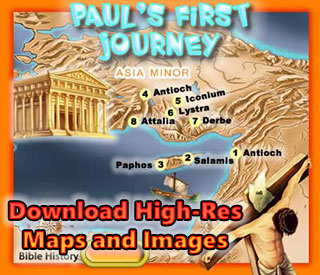
Unearth the rich tapestry of biblical history with our extensive collection of over 1000 meticulously curated Bible Maps and Images. Enhance your understanding of scripture and embark on a journey through the lands and events of the Bible.
Start Your Journey Today!