
1599 Geneva Bible (GNV)
The Geneva Bible: A Cornerstone of English Protestantism A Testament to Reform The 1599 Geneva Bible... Read More

From the earliest days of written Scripture, the Bible was not only read and recited—it was handled, stored, and protected with deliberate care. Across centuries and cultures, believers understood that sacred words required physical preservation. The durability of scrolls, manuscripts, and bound volumes was never accidental. It reflected a deep respect for Scripture as both divine message and tangible artifact.
In a world where writing materials were costly and fragile, the physical survival of sacred texts mattered profoundly. Ancient communities developed careful methods to ensure that Scripture could endure repeated use, long journeys, and the passage of time. Protection was not a matter of ornamentation but of responsibility. The Bible was meant to last, to be transmitted faithfully from one generation to the next, not only in meaning but in form.
This historical concern for preservation shaped how Scripture was written, bound, stored, and later carried. From parchment scrolls guarded in chests to codices protected by sturdy coverings, the Bible’s physical treatment tells a parallel story to its textual transmission—one of reverence expressed through material care.

In the ancient Near East and Mediterranean world, sacred writings were rare and labor-intensive to produce. Biblical texts were initially written on scrolls made of papyrus or animal skins. These materials were vulnerable to moisture, heat, insects, and repeated handling. As a result, communities developed strict practices for their care.
Scrolls containing Scripture were typically stored in designated places—synagogues, temples, or community repositories. They were often wrapped in cloth and kept in protective containers. Access was controlled, not out of secrecy, but to prevent unnecessary damage. The physical condition of the text was directly linked to its perceived holiness.
Jewish scribal traditions emphasized not only accurate copying but respectful handling. Worn or damaged scrolls were not discarded casually. Instead, they were stored or buried according to established customs. This approach underscored the belief that even a deteriorated manuscript retained sanctity because of the words it carried.
The choice of materials used for biblical manuscripts was never arbitrary. Papyrus, while common in early periods, proved less durable in many climates. Over time, parchment and vellum—processed animal skins—became preferred for Scripture. These materials were stronger, more flexible, and more resistant to decay.
Parchment allowed for longer-lasting texts that could survive frequent reading and handling. It also supported ink more reliably, reducing fading and smudging. For communities that expected Scripture to be read aloud regularly and preserved indefinitely, durability was essential.
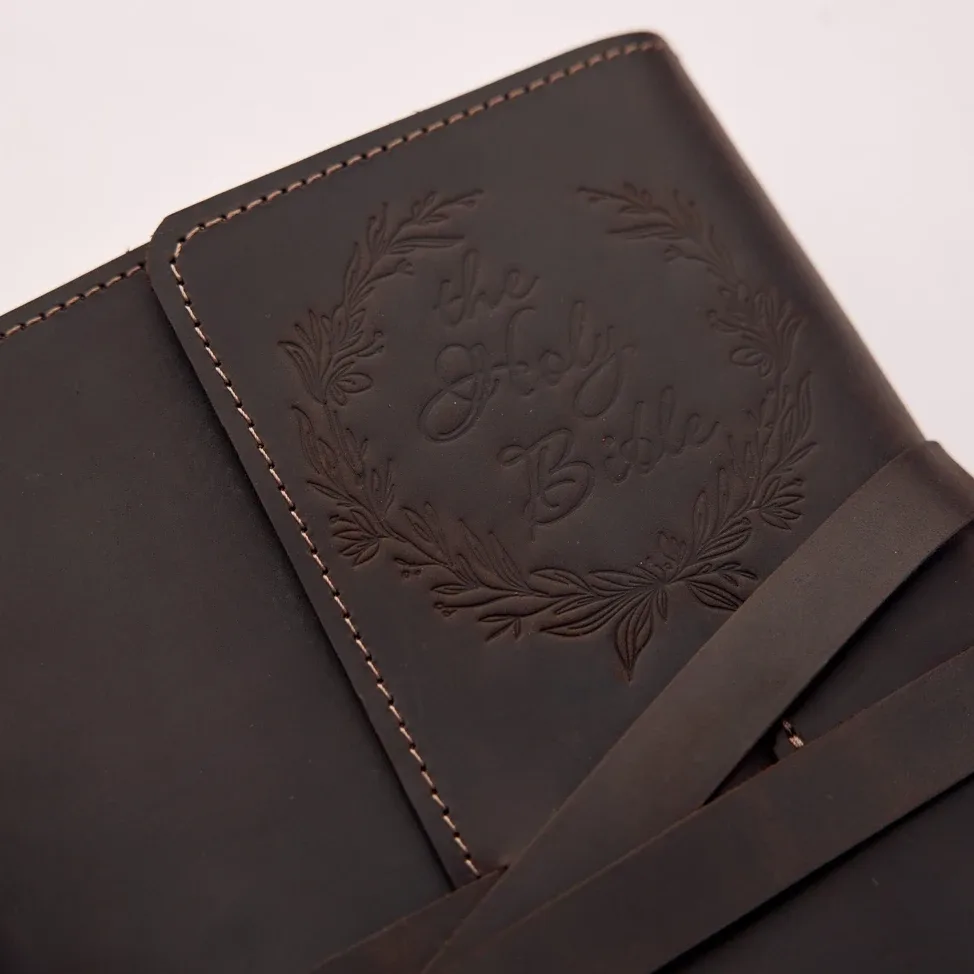
Leather, derived from similar animal sources, became important not only for writing surfaces but also for external protection. Covers, wraps, and bindings made from leather helped shield manuscripts from environmental damage. The use of such materials reflected practical wisdom shaped by reverence: what was sacred deserved the best available means of preservation.
By the early centuries of the Common Era, the codex—an early form of the modern book—began to replace the scroll for biblical texts. This shift was significant. Codices were easier to handle, allowed quicker access to passages, and could be more securely bound.
The binding itself became a form of protection. Wooden boards, leather coverings, and reinforced spines helped keep pages intact. While decoration varied by region and period, the primary concern remained structural integrity. A well-bound codex could withstand travel, public reading, and long-term storage.
Monastic communities played a crucial role in this development. In scriptoria, scribes copied texts meticulously and bound them for longevity. Libraries maintained controlled environments as much as possible. These practices were not about display; they were about stewardship. Scripture was entrusted to human care, and that trust was taken seriously.
Historical evidence shows that Bibles and biblical manuscripts were used regularly, not locked away. This made protection even more necessary. Texts were carried between communities, used in teaching, and read in worship settings. Each use introduced risk.
Protective measures accompanied this mobility. Manuscripts were wrapped, placed in cases, or enclosed in coverings designed to absorb wear. The goal was not to make the object impressive but to make it resilient.
Even today, this impulse toward protection continues in subdued ways. Modern readers may use items such as leather Bible covers not as a statement of luxury, but as a practical extension of historical habits—shielding a frequently handled book from damage, much as earlier generations did with the materials available to them.
While some historical Bibles were richly adorned, decoration was never the defining feature of respect. Many surviving manuscripts are plain by design, emphasizing function over appearance. What mattered most was legibility, completeness, and physical stability.
Durability ensured continuity. A Bible that survived centuries could still be read, studied, and transmitted. This long-term perspective shaped decisions about materials, bindings, and storage. Communities invested effort in protection because they expected Scripture to outlive them.
This attitude contrasts with modern assumptions that associate care with luxury. Historically, care was expressed through restraint—choosing materials that worked, designs that endured, and methods that minimized risk. The physical Bible was valued not as an object of status, but as a vessel of meaning.

Aspect |
Historical Practice |
Modern Practice |
Why It Matters |
Writing Material |
Papyrus, parchment, vellum |
Printed paper |
Reflects durability needs |
External Protection |
Cloth wraps, leather coverings |
Book covers, cases |
Reduces wear from handling |
Storage |
Chests, shelves, dedicated spaces |
Shelves, personal storage |
Preserves condition |
Use Frequency |
Communal reading, teaching |
Personal and communal reading |
Influences preservation |
Longevity Expectation |
Multi-generational |
Long-term personal use |
Encourages care |
Repair |
Rebinding, careful copying |
Repair or replacement |
Maintains continuity |
The way people treat the Bible today cannot be separated from the long history that shaped those habits. While materials and technologies have changed, the underlying principle remains the same: Scripture is worth preserving. Physical care is not an innovation, nor a trend. It is a continuation of practices rooted in necessity, respect, and foresight.
Durability still matters because the Bible is still read, carried, and studied. A well-cared-for text reflects an awareness that meaning is transmitted through material form. Pages, bindings, and covers serve the words they protect.
Across centuries, believers understood that honoring Scripture involved more than interpretation. It included responsibility for the object itself. In that sense, caring for the physical Bible today stands firmly within historical tradition—a quiet acknowledgment that sacred words deserve to endure.
The Geneva Bible: A Cornerstone of English Protestantism A Testament to Reform The 1599 Geneva Bible... Read More
The 21st Century King James Version (KJ21): A Modern Approach to a Classic Text A Balancing Act The ... Read More
The American Standard Version (ASV): A Cornerstone of Modern English Bibles A Product of Scholarly R... Read More
The Amplified Bible (AMP): A Rich and Comprehensive Translation The Amplified Bible (AMP) stands out... Read More
The Amplified Bible, Classic Edition (AMPC): A Timeless Treasure The Amplified Bible, Classic Editio... Read More
The Authorized (King James) Version (AKJV): A Timeless Classic The Authorized King James Version (AK... Read More
The BRG Bible: A Colorful Approach to Scripture A Unique Visual Experience The BRG Bible, an acronym... Read More
The Christian Standard Bible (CSB): A Balance of Accuracy and Readability The Christian Standard Bib... Read More
The Common English Bible (CEB): A Translation for Everyone The Common English Bible (CEB) is a conte... Read More
The Complete Jewish Bible (CJB): A Jewish Perspective on Scripture The Complete Jewish Bible (CJB) i... Read More
The Contemporary English Version (CEV): A Bible for Everyone The Contemporary English Version (CEV),... Read More
The Darby Translation: A Literal Approach to Scripture The Darby Translation, often referred to as t... Read More
The Disciples' Literal New Testament (DLNT): A Window into the Apostolic Mind The Disciples’ Literal... Read More
The Douay-Rheims 1899 American Edition (DRA): A Cornerstone of English Catholicism The Douay-Rheims ... Read More
The Easy-to-Read Version (ERV): A Bible for Everyone The Easy-to-Read Version (ERV) is a modern Engl... Read More
The English Standard Version (ESV): A Modern Classic The English Standard Version (ESV) is a contemp... Read More
The English Standard Version Anglicised (ESVUK): A British Accent on Scripture The English Standard ... Read More
The Evangelical Heritage Version (EHV): A Lutheran Perspective The Evangelical Heritage Version (EHV... Read More
The Expanded Bible (EXB): A Study Bible in Text Form The Expanded Bible (EXB) is a unique translatio... Read More
GOD'S WORD Translation (GW): A Modern Approach to Scripture The GOD'S WORD Translation (GW) is a con... Read More
The Good News Translation (GNT): A Bible for Everyone The Good News Translation (GNT), formerly know... Read More
The Holman Christian Standard Bible (HCSB): A Balance of Accuracy and Readability The Holman Christi... Read More
The International Children's Bible (ICB): A Gateway to Faith The International Children's Bible (ICB... Read More
The International Standard Version (ISV): A Modern Approach to Scripture The International Standard ... Read More
The J.B. Phillips New Testament: A Modern Classic The J.B. Phillips New Testament, often referred to... Read More
The Jubilee Bible 2000 (JUB): A Unique Approach to Translation The Jubilee Bible 2000 (JUB) is a dis... Read More
The King James Version (KJV): A Timeless Classic The King James Version (KJV), also known as the Aut... Read More
The Lexham English Bible (LEB): A Transparent Approach to Translation The Lexham English Bible (LEB)... Read More
The Living Bible (TLB): A Paraphrase for Modern Readers The Living Bible (TLB) is a unique rendering... Read More
The Modern English Version (MEV): A Contemporary Take on Tradition The Modern English Version (MEV) ... Read More
The Mounce Reverse Interlinear New Testament: A Bridge to the Greek The Mounce Reverse Interlinear N... Read More
The Names of God Bible (NOG): A Unique Approach to Scripture The Names of God Bible (NOG) is a disti... Read More
The New American Bible, Revised Edition (NABRE): A Cornerstone of English Catholicism The New Americ... Read More
The New American Standard Bible (NASB): A Cornerstone of Literal Translations The New American Stand... Read More
The New American Standard Bible 1995 (NASB1995): A Refined Classic The New American Standard Bible 1... Read More
The New Catholic Bible (NCB): A Modern Translation for a New Generation The New Catholic Bible (NCB)... Read More
The New Century Version (NCV): A Bible for Everyone The New Century Version (NCV) is an English tran... Read More
The New English Translation (NET): A Transparent Approach to Scripture The New English Translation (... Read More
The New International Reader's Version (NIRV): A Bible for Everyone The New International Reader's V... Read More
The New International Version - UK (NIVUK): A British Accent on Scripture The New International Vers... Read More
The New International Version (NIV): A Modern Classic The New International Version (NIV) is one of ... Read More
The New King James Version (NKJV): A Modern Update of a Classic The New King James Version (NKJV) is... Read More
The New Life Version (NLV): A Bible for All The New Life Version (NLV) is a unique English translati... Read More
The New Living Translation (NLT): A Modern Approach to Scripture The New Living Translation (NLT) is... Read More
The New Matthew Bible (NMB): A Reformation Revival The New Matthew Bible (NMB) is a unique project t... Read More
The New Revised Standard Version (NRSV): A Modern Classic The New Revised Standard Version (NRSV) is... Read More
The New Revised Standard Version Catholic Edition (NRSVCE): A Cornerstone of Modern Catholicism The ... Read More
The New Revised Standard Version, Anglicised (NRSVA): A British Accent on Scripture The New Revised ... Read More
The New Revised Standard Version, Anglicised Catholic Edition (NRSVACE): A Bridge Between Tradition ... Read More
The New Testament for Everyone (NTE): A Fresh Perspective The New Testament for Everyone (NTE) is a ... Read More
The Orthodox Jewish Bible (OJB): A Unique Perspective The Orthodox Jewish Bible (OJB) is a distincti... Read More
The Revised Geneva Translation (RGT): A Return to the Roots The Revised Geneva Translation (RGT) is ... Read More
The Revised Standard Version (RSV): A Cornerstone of Modern English Bibles The Revised Standard Vers... Read More
The Revised Standard Version Catholic Edition (RSVCE): A Cornerstone of English Catholicism The Revi... Read More
The Message (MSG): A Contemporary Paraphrase The Message, often abbreviated as MSG, is a contemporar... Read More
The Voice: A Fresh Perspective on Scripture The Voice is a contemporary English translation of the B... Read More
The Tree of Life Version (TLV): A Messianic Jewish Perspective The Tree of Life Version (TLV) is a u... Read More
The World English Bible (WEB): A Modern Update on a Classic The World English Bible (WEB) is a conte... Read More
The Worldwide English (WE) New Testament: A Modern Take on a Classic The Worldwide English (WE) New ... Read More
The Wycliffe Bible: A Cornerstone of English Scripture A Revolutionary Translation The Wycliffe Bibl... Read More
Young's Literal Translation (YLT): A Literal Approach to Scripture Young's Literal Translation (YLT)... Read More
For enthusiastic readers, managing a collection of books can become challenging. An expanding "to be... Read More
Deuteronomy 18 - "And if you say in your heart, 'How shall we know the word which the LORD has not ... Read More
John 14:26 - "But the Counselor, the Holy Spirit, whom the Father will send in my name, he will teac... Read More
(Enlarge) (PDF for Print) Map of the Origin of Nations and Races that were dispersed by God in Gene... Read More
The Journeys of Abraham (Enlarge) (PDF for Print) - Map of Abraham's Journey with Trade Routes Map ... Read More
(Enlarge) (PDF for Print) Map of the Route of the Hebrews from Egypt This map shows the Exodus of t... Read More
Mark 6:52 - For they considered not the miracle of the loaves: for their heart was hardened. God did... Read More
also see:The Encampment of the Children of IsraelThe Children of Israel on the March THE OUTER COURT... Read More
2 Chronicles 36:23 - Thus saith Cyrus king of Persia, All the kingdoms of the earth hath the LORD Go... Read More
All Bible Maps - Complete and growing list of Bible History Online Bible Maps. Old Testament Maps T... Read More
The Bible portrays marriage as a lifelong bond built on love, faith, and commitment, reflecting God'... Read More
Ancient Manners and Customs, Daily Life, Cultures, Bible Lands NINEVEH was the famous capital of an... Read More
Distances From Jerusalem to: Bethany - 2 milesBethlehem - 6 milesBethphage - 1 mileCaesarea - 57 m... Read More
Dagon was the god of the Philistines. This image shows that the idol was represented in the combina... Read More
Map of Israel in the Time of Jesus (Enlarge) (PDF for Print) Map of First Century Israel with Roads... Read More
The Table of Shewbread (Ex 25:23-30) It was also called the Table of the Presence. Now we will pas... Read More
see also:The PriestThe Consecration of the PriestsThe Priestly Garments The Priestly Garments 'The ... Read More
Introduction to the Book of Daniel in the Bible Daniel 6:15-16 - Then these men assembled unto the k... Read More
The Golden Lampstand was hammered from one piece of gold. Exod 25:31-40 "You shall also make a lam... Read More
The Golden Altar of Incense (Ex 30:1-10) The Golden Altar of Incense was 2 cubits tall.It was 1 cub... Read More
Ancient Tax Collector Illustration of a Tax Collector collecting taxes Tax collectors were very des... Read More
also see: Blood Atonement and The Priests The Five Levitical Offerings The Sacrifices The sacrificia... Read More
Genesis 10:32 - These are the families of the sons of Noah, after their generations, in their nation... Read More
Illustration of Jesus Reading from the Book of Isaiah This sketch contains a colored illustration o... Read More
"But the angel said unto him, Fear not, Zacharias: for thy prayer is heard; and thy wife Elisabeth s... Read More
also see: The Encampment of the Children of IsraelThe Children of Israel on the March The brazen a... Read More
In a rapidly evolving world shaped by both timeless values and groundbreaking technology, individual... Read More
Rome, the Eternal City, has stood as a symbol of history, culture, and religion for over two millenn... Read More
Many teachers assign pieces titled “an essay about god in my life.” The title invites calm thought a... Read More
Exploring identity has become part of the digital life. Social media, streaming, and gaming give you... Read More
Unearth the rich tapestry of biblical history with our extensive collection of over 1000 meticulously curated Bible Maps and Images. Enhance your understanding of scripture and embark on a journey through the lands and events of the Bible.
Start Your Journey Today!